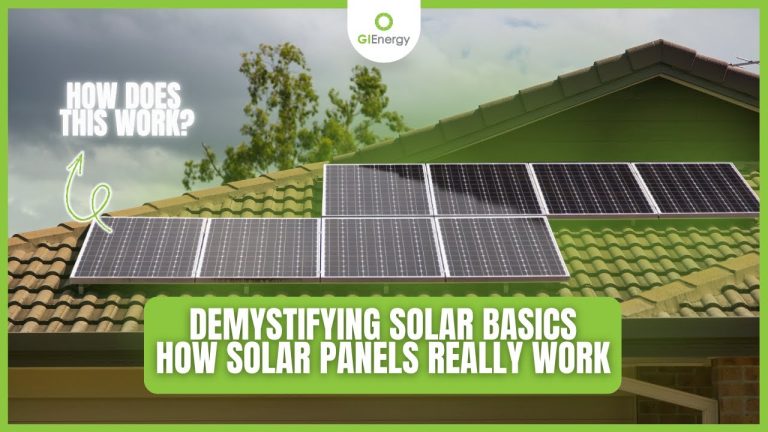
So, your solar panels are making more electricity than your house needs right now.
What happens then? It’s actually a pretty common situation, especially when the sun is shining bright.
Instead of that extra power just vanishing, there are ways to handle it.
We’ll look at what that surplus energy means and how you can make the most of it, whether it’s helping your neighbors or saving you money.
Key Takeaways
- When your solar panels generate more electricity than your home is using at that moment, it’s called excess solar energy.
This often happens during sunny afternoons.
- Homeowners sometimes intentionally size their solar systems to produce more than they need, planning for future energy use or the panels’ gradual efficiency drop over time.
- Excess solar power can be sent back to the electric grid, often earning you credits through a process called net metering, or stored in home battery systems for later use.
- Managing surplus solar energy can significantly lower your electricity bills, speed up the time it takes for your solar investment to pay for itself, and sometimes even result in year-end payments or credits from your utility.
- Strategies like shifting energy-heavy tasks (like laundry or charging an electric car) to peak solar production hours, using smart home devices, or even using your electric vehicle as a battery can help you use more of the power you generate.
Understanding What Happens When Homes Generate Excess Solar Power
So, your solar panels are working great – maybe even too great! It’s a common situation for homeowners with solar installations to produce more electricity than they need at certain times.
This isn’t a problem; it’s actually a sign of a well-performing system.
Let’s break down what this excess solar energy is and why it happens.
Defining Excess Solar Energy Production
Excess solar energy is simply the electricity your solar panels generate that isn’t immediately used by your home’s appliances or systems.
Think about it: your panels are busy making power all day when the sun is out, but your home’s energy use might be lower during those peak daylight hours.
If your panels produce 5 kilowatts (kW) of power, but your house is only using 2 kW at that moment, the remaining 3 kW is your excess solar energy.
This surplus power is incredibly common, especially during sunny days.
Why Homeowners Intentionally Overproduce
It might seem a little odd to aim for generating more power than you need, but it’s often a smart move.
Systems are frequently sized to meet annual energy needs, which means they’ll naturally overproduce during sunnier months to compensate for lower production in winter.
Plus, solar panels do degrade slightly over time, usually less than 1% per year.
Installing a bit extra upfront helps ensure your system can still meet your goals 20 or 25 years down the line.
Sometimes, homeowners also anticipate future energy needs, like adding an electric vehicle or expanding their home, and size their system accordingly.
Peak Production Patterns and Seasonal Variations
Solar production isn’t constant Throughout the Day or year.
Most solar systems hit their peak output during the middle of the day, typically between 10 AM and 2 PM, when the sun is strongest.
During this window, a typical residential system might generate 70-80% of its total daily energy.
However, household energy demand might be lower then, leading to that surplus.
Seasonally, you’ll likely see the most excess power generated in the summer due to longer daylight hours and more intense sunshine.
Winter, on the other hand, might see production that barely covers your home’s needs.
Understanding these patterns is key to managing your surplus solar power effectively.
Managing Your Surplus Solar Energy
So, your solar panels are working overtime, huh? That’s a good problem to have! When your system churns out more electricity than your household is using at that moment, it’s called surplus solar energy.
It’s pretty common, especially during sunny midday hours when your panels are at their peak performance, but you might be out or just not using much power.
The good news is, this extra juice doesn’t have to go to waste.
You’ve got a few main ways to handle it, and they can actually save you money or even earn you a little something back.
Exporting Power Back to the Grid
This is probably the most common way people deal with extra solar power, especially if you’re connected to the main power lines (what’s called a ‘grid-tied’ system).
Utilities have programs like net metering or net billing that let you send your unused solar electricity back to the grid.
Think of it like a two-way meter.
When you use power from the grid (like at night), the meter spins one way.
When you send your solar power back, it spins the other way.
Essentially, you’re trading the power you generate for power you’ll use later.
- Net Metering: In many places, this means you get credit on your bill for the excess energy you send back, usually at the same rate you pay for electricity.
If you send back more than you use over a billing period, that credit can roll over to the next month.
- Net Billing: This is similar, but the credit you get for exported power might be at a different, often lower, rate than what you pay for electricity.
It’s still beneficial, just not quite as lucrative as net metering.
- Feed-in Tariffs: Some regions have specific rates they pay for solar energy fed into the grid, which can be a fixed price per kilowatt-hour.
The exact rules and rates for sending power back to the grid vary a lot by location and utility company.
It’s worth checking with your local provider to see what options are available and how they work.
Storing Energy in Battery Systems
Another popular option is to store that extra solar power in a home battery system.
Instead of sending it straight back to the grid, you keep it for later.
This is super handy for a few reasons:
- Power When the Sun Isn’t Shining: You can use the stored energy at night or during cloudy days, reducing your reliance on the grid even further.
- Backup Power: Many home battery systems can provide electricity during a power outage, keeping your essential appliances running.
- Peak Shaving: If your utility charges more for electricity during peak demand hours (usually late afternoon/early evening), you can use your stored solar energy then, avoiding those higher costs.
Battery technology is getting better and more affordable, making it a really attractive way to get the most out of your solar investment.
It gives you more control over your energy use.
Creative Uses for Excess Power
Beyond just sending it back or storing it, you can also find ways to use that extra solar energy right at home.
This is all about shifting your energy usage to match when your panels are producing the most.
- Charge Electric Vehicles (EVs): If you have an EV, charging it during peak solar production hours is a fantastic way to use up surplus energy.
Some EVs can even send power back to your home (bidirectional charging), acting like a mobile battery.
- Run High-Energy Appliances: Schedule your washing machine, dishwasher, or pool pump to run during the sunniest parts of the day.
- Heat Water: Many solar water heaters can be set to use excess electricity to heat your water, storing that thermal energy for later use.
Thinking about how you use energy throughout the day and aligning it with your solar production can make a big difference in how much you benefit from your system.
Financial Benefits of Excess Solar Generation
So, your solar panels are working overtime, huh? That’s a good problem to have! When your system churns out more electricity than your house needs at any given moment, it doesn’t just disappear.
This surplus power can actually put money back in your pocket or, at the very least, significantly cut down what you owe the utility company.
It’s all about how you manage that extra juice.
Impact on Monthly Utility Bills
This is usually the first thing people notice.
When your solar panels are generating more than you’re using, that excess power gets sent back to the grid.
Depending on your utility’s setup, this can translate into some pretty sweet savings on your monthly bill.
Think of it like a credit system.
The more you send back, the less you have to pay for the power you do pull from the grid.
In some cases, especially with net metering, your bill could drop to zero, or even show a credit balance.
It really depends on your local utility’s specific policies and how much you’re overproducing.
Accelerating Your Solar Investment Return
Every dollar saved on electricity bills or earned from excess power generation directly speeds up the time it takes for your solar panel system to pay for itself.
It’s like getting a bonus return on your investment.
Instead of just offsetting your own usage, your panels are now actively contributing to your financial goals by reducing expenses and potentially creating income.
This means the initial cost of going solar starts to look a lot more appealing when you factor in these ongoing financial perks.
Potential for Year-End Payments or Credits
Some utility companies have programs where, at the end of a billing year, they’ll settle up any remaining credits you’ve accumulated from sending excess power back to the grid.
This often happens at a wholesale rate, which is usually less than what you pay for electricity.
Still, getting a check or a significant credit from your utility for power you generated for free is a nice little bonus.
It’s not going to make you rich, but it’s a tangible financial benefit that acknowledges your contribution to the grid.
Here’s a quick look at how it can play out:
- Reduced Bills: Your monthly electricity bill goes down, sometimes significantly.
- Faster Payback: The time to recoup your solar investment shortens.
- Year-End Credits/Payments: You might receive a financial settlement for unused excess power.
The financial upside of excess solar generation isn’t just about saving money; it’s about making your solar investment work harder for you.
By understanding how your utility compensates for exported power and by potentially using storage or other methods, you can maximize the economic benefits, turning a surplus of clean energy into a tangible financial asset over time.
Strategies for Maximizing Solar Overproduction
So, your solar panels are working overtime, huh? That’s a good problem to have! It means you’re generating more clean energy than your household is using, especially during those sunny midday hours.
But what do you do with all that extra juice? Letting it just disappear is like leaving money on the table.
The good news is, there are smart ways to make sure that surplus solar power works for you.
It’s all about being a bit strategic with your energy use and maybe adding a few clever tools to your setup.
Load Shifting for Immediate Consumption
The simplest way to use your extra solar power is to just use it when it’s being made.
This is called “load shifting.” Think of it like doing your laundry or running the dishwasher during the sunniest part of the day instead of at night.
This way, you’re using the power your panels are actively producing, cutting down on what you might need from the grid later.
It’s a straightforward approach that can make a noticeable difference in your bills.
- Wash clothes and run the dishwasher during peak solar hours.
- Pre-heat or pre-cool your home.
- Charge any portable devices or power banks.
Shifting your energy use to match your solar production is a practical way to increase your self-consumption.
It means your solar system is directly powering your life, not just sending energy back to the grid for a small credit.
Smart Home Automation for Energy Optimization
This is where things get a bit more high-tech, but in a good way.
Smart home systems can be programmed to automatically turn on appliances when your solar production is high.
Imagine your water heater kicking in to heat water between 11 AM and 3 PM, storing that hot water for you to use later.
Or your electric car charger starting up automatically when the sun is shining brightest.
These systems can really take the guesswork out of using your excess power efficiently.
Many modern inverters come with monitoring apps that let you see your production and consumption in real-time, helping you fine-tune your strategy.
You can even look into upgrading your hot water system to be more responsive to solar generation.
Utilizing Electric Vehicles as Energy Assets
If you have an electric vehicle (EV), it can be a fantastic tool for managing excess solar power.
Think of your EV’s battery as a big, mobile energy storage unit.
You can program your EV to charge only when your solar panels are producing the most power.
Some advanced systems even allow for “vehicle-to-grid” (V2G) technology, where your car could potentially send power back to the grid during peak demand times, though this is still pretty cutting-edge.
For now, just ensuring your EV charges during peak solar hours is a smart move that uses up that surplus energy and gets you ready for your next drive, all powered by the sun.
This is a great way to maximize solar savings by using daytime-generated power efficiently.
Grid-Tied Versus Off-Grid Excess Energy
When your solar panels are working overtime, what happens to that extra power really depends on how your system is set up.
It’s a pretty big difference between being connected to the main power lines or going completely solo.
Automatic Export in Grid-Tied Systems
If your home is connected to the utility grid, it’s usually pretty straightforward.
That extra solar energy your panels are making? It automatically gets sent back out onto the grid.
Think of it like this: your house is a small power plant, and any extra juice flows out to your neighbors.
Most places have a program called net metering for this.
Your electric meter basically spins backward when you send power out, and then spins forward when you pull power from the grid.
This means you’re essentially using the grid as a giant battery, getting credit for the power you supply.
You’ll typically only pay for the difference between what you use and what you send back.
Storage or Waste in Off-Grid Systems
Going off-grid means you’re on your own.
There’s no utility company to send your extra power to.
So, what happens then? Well, if your batteries are already full and you don’t have anything else running that needs power, that extra solar energy just…
stops being used.
It’s not necessarily wasted in a harmful way, but it’s not being put to good use either.
It’s like having a full water tank – you can’t add any more water until some is used.
Here’s a quick look at the main differences:
| Feature | Off-Grid System | Grid-Tied System |
|---|---|---|
| Excess Energy Handling | Not used unless additional loads are added | Sent back to the grid (net metering where allowed) |
| Battery Requirement | Mandatory | Optional |
| Grid Backup | Relies solely on batteries | Grid provides power when solar isn’t enough |
Different Optimization Approaches
Because of these differences, you’ll approach managing excess power differently.
For grid-tied homes, the focus is often on maximizing the credits you get from the utility, maybe by shifting when you use high-energy appliances to match peak solar production.
For off-grid setups, the goal is to use every bit of power you generate.
This might mean:
- Charging secondary batteries: Using portable power stations or RV batteries to store extra energy.
- Running “dump loads”: These are basically devices like water heaters or space heaters that can safely use up the surplus power.
- Powering specific tools or equipment: If you have a workshop, you might run power tools during peak sun hours.
For off-grid systems, careful planning is key.
You need to make sure your battery bank is large enough to store power for cloudy days, and you might even consider oversizing your solar array slightly to account for less sunny periods, especially in winter.
It’s all about making sure you have enough power when you need it, and a plan for when you have too much.
Ultimately, whether your excess solar power is a valuable credit on your bill or a missed opportunity depends entirely on whether you’re connected to the grid or living the independent off-grid life.
Real-World Success with Excess Solar
It’s one thing to talk about generating more solar power than you need, and it’s another to see it actually happening and making a difference.
Lots of homeowners are finding that their solar setups are doing more than just cutting their electric bills; they’re providing real benefits, especially when things get a little unpredictable.
Personal Stories of Energy Savings
Many people install solar with the goal of reducing their monthly expenses, and overproduction often speeds that up.
Take the family in Virginia, for example.
They installed solar and, within their first seven months, were producing more electricity than they used.
This meant their electricity bills were practically non-existent for most of the year.
It’s a common story: the initial investment pays off faster because the system is working overtime, sending that extra power back to the grid.
This surplus isn’t just about saving money; it’s about getting more value out of the solar panels themselves.
Emergency Power During Outages
This is where excess solar really shines, literally.
Imagine a storm rolls through, knocking out power for the whole neighborhood.
For one homeowner in the path of a hurricane, their solar system, coupled with a battery backup, kept their lights on.
While everyone else was in the dark, they had power for essential needs.
This isn’t just a theoretical benefit; it’s about having a reliable power source when you need it most, thanks to the energy stored up from those sunny days.
It provides a real sense of security.
Maximizing Benefits Through Combined Strategies
Most folks who are really getting the most out of their solar setups aren’t just letting the excess power go to waste.
They’re combining different approaches.
For instance, some homeowners are using smart home devices to automatically run high-energy appliances, like dishwashers or washing machines, during peak solar production hours.
Others are looking at more advanced options.
Here are a few ways people are getting creative:
- Battery Storage: Storing excess energy for use at night or during cloudy spells.
This is a big one for reliability.
- Electric Vehicle (EV) Charging: Using surplus solar to charge an electric car, effectively turning your car into a mobile battery that runs on sunshine.
- Exporting to the Grid: When you don’t have storage or immediate use, sending the power back to the utility company.
Depending on your local rules, you might get credits or even a small payment for this.
The key takeaway is that excess solar power isn’t a problem; it’s an opportunity.
By thinking ahead and using a mix of strategies, homeowners can significantly boost their savings, gain energy independence, and even contribute to a more stable local grid.
It’s about making every kilowatt-hour count.
Some people are even exploring using excess power for things like cryptocurrency mining or powering backup communication systems, showing just how versatile this clean energy can be.
It really depends on your specific needs and what your local utility allows, but the potential is definitely there.
Wrapping Up: Making the Most of Your Sunshine
So, you’ve got solar panels, and sometimes they make more power than you can use right then.
That’s actually a good thing! It means your system is working well.
Whether you’re sending that extra power back to the grid, storing it in a battery for later, or finding clever ways to use it around the house, there are plenty of smart options.
Thinking about how to handle this surplus energy can really help lower your bills and make your solar investment pay off even faster.
It’s all about making sure that sunshine is working as hard as possible for you and even helping out your neighbors with clean energy.
Frequently Asked Questions
What happens to the extra electricity my solar panels make?
When your solar panels create more electricity than your home is using at that moment, it’s called excess solar energy.
This extra power doesn’t just disappear! It can be sent back to the electric grid for others to use, stored in a home battery for later, or used for special tasks around your house.
Why would someone want their solar panels to make more power than they need?
It might seem strange, but making extra power is often planned.
Solar systems are usually set up to produce enough energy for the whole year, even though they make more power on sunny summer days than on cloudy winter days.
Also, panels get a tiny bit less efficient over time, so making extra now helps ensure they meet your needs for many years.
How does sending extra power back to the grid work?
This is usually done through something called ‘net metering.’ Your electric meter can spin backward when you send power to the grid, showing you’ve sent energy out.
Later, when you use power from the grid, you only pay for the difference between what you used and what you sent back.
It’s like a credit system!
Can I store my extra solar power instead of sending it to the grid?
Yes, you absolutely can! Many homes with solar panels also have battery storage systems.
These batteries soak up the extra electricity generated during the day.
Then, you can use that stored power at night or when the sun isn’t shining, making you less reliant on the power company.
Are there other ways to use extra solar power besides the grid or batteries?
Definitely! You can get creative.
For example, you could charge an electric car during peak sun hours, run high-energy appliances like dishwashers or washing machines during the day, or even pre-heat or pre-cool your home.
Smart home devices can help automate these tasks.
What’s the main financial benefit of having extra solar power?
The biggest win is lower electricity bills! By sending extra power back to the grid or using it yourself through batteries or smart scheduling, you reduce the amount of electricity you have to buy from your utility.
This can also help your solar panel system pay for itself faster.